She earned her offer because she was prepared to answer any question without hesitation and complete authenticity.
In our phone call just after receiving her offer, we spoke about the moment the hiring manager asked her,
"How are you going to make my job easier?"
She followed with, "Penny, everything you said she would say or ask during our interview practice came to fruition, and I knew exactly how to handle it!"
From the beginning, this client was looking for a special type of coach and ready to make the changes that would allow her to stand out.
Forthright in her communication and a fast action taker, she invested a lot of thoughtful energy in all of her work.
Her dedication to her value positioning in interviews and networking conversations made her the obvious candidate.
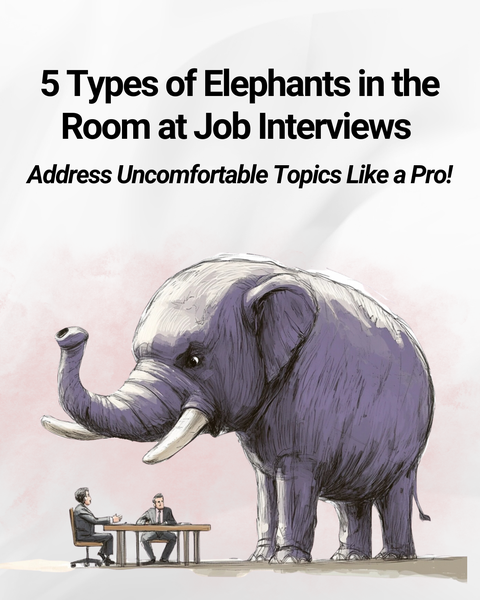
How to Talk About "Elephants In the Room"
During Job Interviews
Job interviews can be daunting, especially when you’re asked about sensitive topics that you’re trying to avoid.
Addressing the “elephants in the room” with honesty and confidence is impactful and why you should expect to be prepared with your responses!
4 Common Interview Challenges and How to Tackle Them
1️⃣ A Gap in Employment What they’re thinking: “Why weren’t you working during this time?”
How to address it: Be honest and highlight what you learned so that the story you tell conveys it as becoming a positive experience with new skills
discovered. Example: “During that time, I focused on [personal development/upskilling/caring for family]. I’m more motivated and prepared to bring my skills to this role.”
2️⃣ Being Terminated from a Previous Job What they’re thinking: “What happened, and have you learned from
it?”
How to address it: Be transparent and focus on growth and the value you can add to the role you're interviewing for. Example: “That role wasn’t the right fit for me. In fact, it became clear that my expertise is in [specific lesson], and I’m now focused on finding a position that aligns better with my strengths.”
3️⃣ Being Overqualified What they’re thinking: “Why do you want this role?”
How to address it: Communicate your genuine interest in (the company, their mission, what motivates you about the role) and long-term goals. Example: “I’m excited about this role because [specific reason] and see it as an opportunity to contribute (X) to the company and develop skills in this area.”
4️⃣ Being Underqualified What they’re thinking: “Can they handle this role?”
How to address it: Highlight your transferable skills and share a story that has similarity. Use the STAR Method and be sure to share your impact. Example: “I deliver [relevant skill/experience] with results that lead to growth." Note: your story and the achieved results will validate your track record.
Position your ability to handle these topics with confidence.